Showing posts with label philippines. Show all posts

Tuesday, June 25, 2013

2013 Supermoon Seen from Philippines

Supermoons happen each year. They are also called perigee moons because of their marked closeness to the earth compared with other full moons. A perigee moon can appear 14% bigger in the sky and 30% brighter. But to anyone's notice, it really doesn't stand out from any other full moon. Here are some of pictures of the June 23, 2013 Supermoon as it appeared over Gensan, Philippines. It was actually raining during that night, but the skies cleared up a bit and the moon showed itself though briefly. I took the opportunity.


Thursday, April 25, 2013

Full Moon Rises Again


One nice thing about the full moon is that it rises so majestically over the eastern horizon just as the sun has set. For avid sky observers, it is such a dramatic scene. Well, it is a dramatic scene if you catch it. We don't always see a rising full moon here because of unpredictable sky conditions. Sometimes it's too cloudy to see it.

Here are some shots of the rising April full moon.


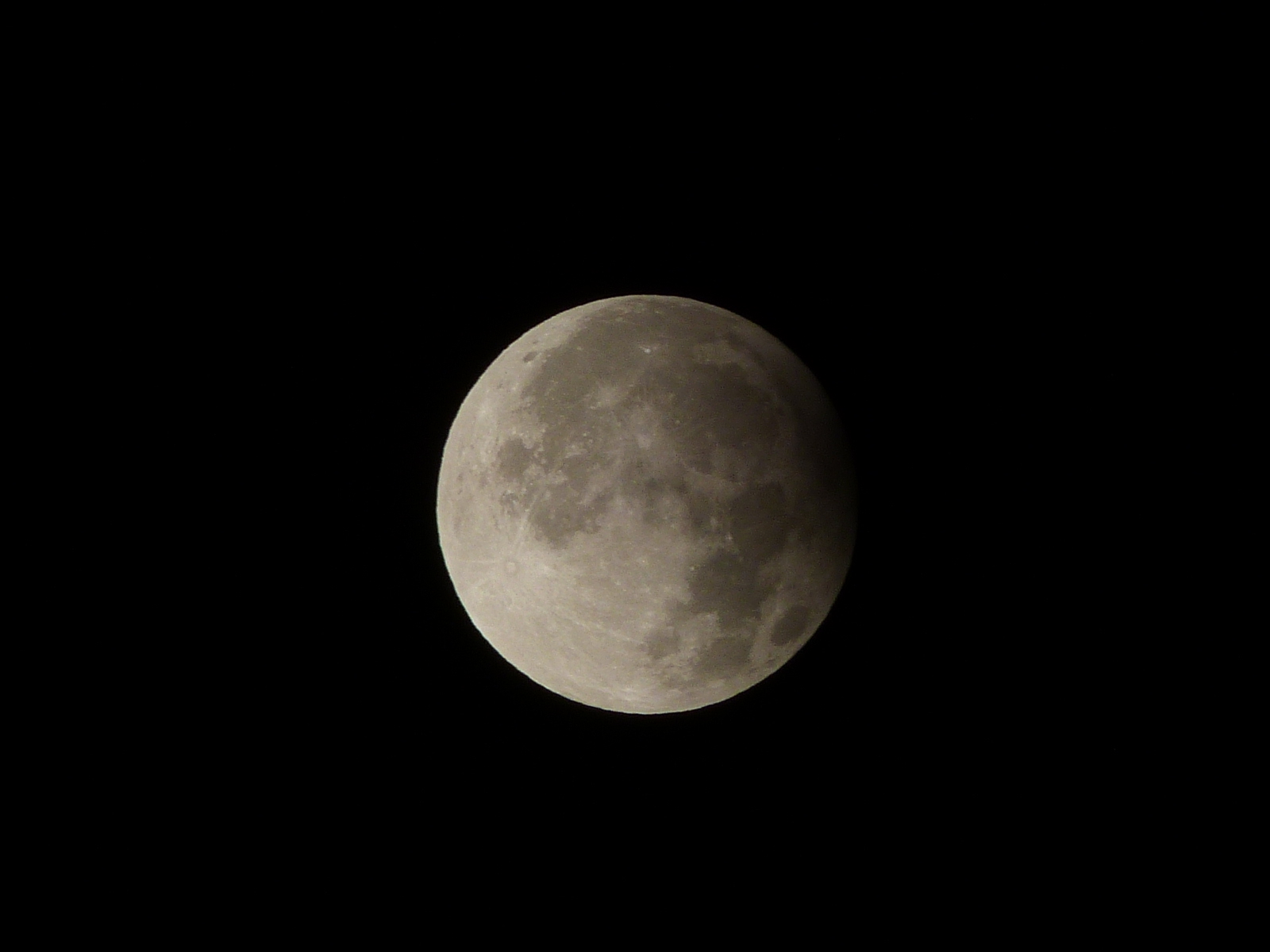
Partial Lunar Eclipse Seen from Gensan

I realized that only a few people are interested in celestial events, such as the recent partial lunar eclipse. Anyway, it wasn't that spectacular. Worse, it had to occur in the small hours of Friday, April 26, 2013. Charts indicated that the eclipse started around 2:03 a.m. Philippine Time, but I set my alarm for 3 a.m., around which time I would see the penumbral shadow of the Earth on the moon.


As the moon passes by the penumbral shadow of the Earth, its brightness decreases a bit, but untrained eyes won't be able to discern any difference. However, cameras can. Anyway, this part of the eclipse isn't so spectacular. Recalling the penumbral lunar eclipse on November 28, 2012, I can say it wasn't thrilling. Check out the photos of the Nov.28, 2012 eclipse here: 11/28/2012 penumbral lunar eclipse


The moon touched the umbral (darker) shadow of the Earth at 3:54 a.m. That's according to charts. 


According to EarthSky.org, the peak of the eclipse is at 20:07 UTC or 4:07 a.m. Philippine Time. 


Then the moon started slipping away from the Earth's shadow.


I called it a night at 5 a.m. Nothing really too spectacular about partial lunar eclipses, but I'm a bit glad to have recorded this celestial event.


Thursday, September 20, 2012

Birds in the Neighborhood


Sometimes I get away from my desk to take snaps of birds flying around the neighborhood. Ever since I owned a capable camera, I have learned to take snaps of these flying creatures. Whenever they settle on a cable or a twig, I get the opportunity to take snapshots of them. So far, I have taken photos of 6 types of birds.

Chestnut Munia
Red Turtle Dove

Birding has become more of an addiction than a hobby. I get a certain kind of satisfaction every time I get a good photo of a bird. It’s not easy to take shots of these birds. You have to be not too near but not too far. I’m using a superzoom point-and-shoot camera with a telephoto reach of 600mm. With this camera, I can get good shots of birds like the chestnut munias or tree sparrows 5-10 meters away. If they are too far, I can only manage to get small, unflattering images of them.

Eurasian Tree Sparrow

Olive-backed Sunbird
I used to take bird photos using the Auto or Program Mode, but I’ve been learning to use the Manual Mode recently to get more precise settings. It took me a few months to gain confidence to switch to the M mode on the dial. But with the right settings, I can get really nice shots.

Asian Glossy Starling


Young Asian Glossy Starling 
Because birds like to move a lot, it’s sensible to use fast shutter speed. I can get sharp bird shots at shutter speeds less than 1/100 s. This fast shutter speed demands a lot of light. Hence, the best times for me to take photos are during sunny days. My camera can manage to get decent photos only up to ISO 400, so it’s extremely challenging to get good snaps during cloudy days.

Yellow-vented Bulbul